OpenAI is quietly trying to rebuild the internet on its own rails.
Not just smarter chatbots. Not just a better model than the competition. I am talking about something bigger. A full stack, top to bottom, from the power plants that feed the servers, to the chips on the boards, to the apps on your phone and in your browser.
To investors, that sounds like the perfect moat. To the rest of us, it sounds a lot like waking up one day and realizing most of what we do online runs through a handful of private chokepoints.
So let us unpack what OpenAI is really building, why it suddenly needs a mountain of cash to do it, and where that leaves small businesses, indie builders, and everyday humans who still want a real say in their own tech.
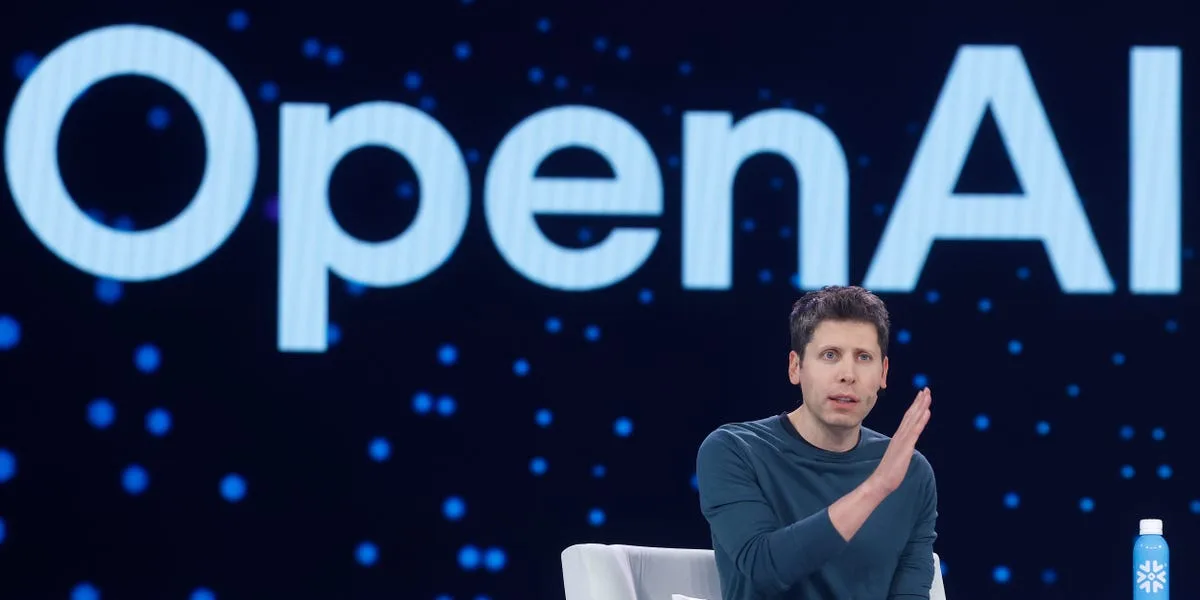
Start at the very bottom of the stack: energy. Training and running giant models is not some cute cloud bill. It is a power plant problem. OpenAI does not own the grid, but its chief executive, Sam Altman, has put serious money into ambitious energy companies, including fusion startups. If even one of those bets pays off, OpenAI is no longer just a customer buying electricity. It becomes part owner of the fuel that runs its own brain.
Move one level up and you hit chips. This is where the numbers start to look like national budgets. OpenAI hired a former Google engineer who helped design Google92s specialized tensor processing units to lead its own chip program. The goal is simple: depend less on Nvidia and other vendors, and build custom silicon tuned exactly to OpenAI92s models.
That kind of control is powerful. But it also means the gap between the haves and the have-nots gets wider. If your competition designs its own chips and you are renting whatever is left on the cloud, you are not playing the same game.
Next layer: data centers. Right now, OpenAI rents compute from the big clouds, including Microsoft. But its chief financial officer has already said out loud that the plan is to build its own facilities. Think about that shift. When you own the buildings, the cooling, the fiber, and the racks, you are no longer just a clever tenant. You are the landlord of your own universe.
By the time we reach the model layer, OpenAI looks more familiar. That is where GPT-5 and its cousins live. This is also where more than a few million developers plug in. Every app that calls their API, every workflow that leans on their model, feeds usage back into that system.
More usage means more data. More data means better models. Better models attract more developers. That is a classic flywheel. And it is where lock-in likes to hide: not in one evil clause in the terms of service, but in a thousand little conveniences that make it painful to leave.
Now add distribution. OpenAI has launched its own browser. It bought an AI gadget company founded by designer Jony Ive for billions of dollars. It is clearly betting on hardware and form factors that keep its assistant in front of you all day, not just in a single browser tab.
And finally, the top of the stack: applications. This is the part you and I actually touch. ChatGPT already serves hundreds of millions of people every week, with millions of paid business seats. OpenAI has a serious applications division now, led by executives who know how to turn software into daily habit, not just a demo.
There is even a jobs product that feels uncomfortably close to LinkedIn, which is a Microsoft property. That tells you how far OpenAI is willing to go up the stack, even into territory owned by its biggest partner.
Put all of that together and you can see the picture: energy, chips, data centers, models, platforms, distribution, apps. A true full stack. And to build it, you do not raise a seed round. You raise tens of billions. That is why OpenAI had to untangle its famously weird corporate structure and move toward a more traditional equity setup. Without that, they risk losing out on megadeals from firms like SoftBank.
From OpenAI92s perspective, this is rational. Infrastructure is expensive. Competition is brutal. If you want to survive next to Google, Microsoft, and the rest, you build moats wherever you can.
From the perspective of a free and open internet, those moats can start to look like walls.
So where does that leave the rest of us? We are not going to spin up fusion reactors in the backyard. Most of us are not hiring a chip team next quarter. But that does not mean you have to live entirely inside somebody else92s empire.
Here are the levers you still control.
First, treat OpenAI and every big AI provider as tools, not as a new religion. Use them where they make sense, but design your systems so the model can be swapped. Keep your prompts, your routing logic, and your business rules under your own roof. Test your workloads against at least one alternative provider. That way, if prices jump or terms change, you have an exit, not an existential crisis.
Second, do not sleep on open models and open tooling. They may not beat the absolute top closed model on every benchmark, but they come with something different: forkability. The option to run them on your own hardware, or with a partner you actually know. For workloads where privacy, predictability, or legal control matter more than squeezing the last bit of performance, that trade can be worth it.
Third, remember where your real advantage lives. It is almost never the graphics card. For a small business or an indie builder, the real value is in the workflow you design, the support you provide, and the way you solve a specific problem for a specific group of people.
Even if you are renting the brain from OpenAI or someone else, you can still own the relationship. Own your data models. Own your user experience. Build in ways that let you move providers without burning your entire product down.
And finally, vote with your stack. If you care about decentralization, about open source, about user control, support the tools and vendors that walk that talk. Choose services that make it easy to export your data. Contribute to open projects when you can. Build one small piece of the stack yourself in the place where it matters most to your business.
At TNT Nerds, that is the game we are playing every day. We are not trying to be the next OpenAI. We are here to help you navigate this landscape without handing the keys to your entire future to one company.
So here is the one takeaway I want you to remember.
You do not need to own the entire AI stack to stay free. But you do need to be deliberate about which layers you rent, which layers you share, and which layers you keep.
If you can answer that for your own setup, you are already ahead of most of the internet.