our new website is still under construction, pardon any dust.

our new 4d ai is being implemented, she will blow your socks off.

[cloneui_pill id="ziggi-pill" bot="chatbot-egeoub" lang="en-US" label="Talk to Ziggi"]
Full Article, Podcast, & Blog

Edge vs. Cloud Hosting in 2026: Who Will Win the Battle for Your Apps?

Futuristic hosting technology interface

If you’ve been tracking the tech world lately, you’ve probably noticed everyone arguing about the same question: will edge computing or cloud hosting dominate the digital landscape by 2026? It’s one of those conversations that starts off simple… and suddenly turns into a deep dive involving latency charts, security frameworks, and a surprising amount of passionate opinions.

We dug through the noise, sifted the real insights, and even referenced a fantastic overview published on Vocal Media. If you’re sipping your morning coffee right now, settle in — this breakdown delivers the clarity business owners need to make smart hosting decisions heading into 2026.

Cloud Hosting Today: Smarter, Faster, and Still Growing

Cloud hosting isn’t slowing down. Providers like AWS, Azure, and Google Cloud push more automation, more AI‑powered scalability, and more globally accessible infrastructure every year. For startups, SaaS platforms, and growing organizations, cloud is still the first choice.

  • Lightning-fast deployment cycles
  • Scalable resources without huge upfront costs
  • Flexible management for hybrid and remote teams
  • High redundancy and deeply developed security layers

This level of reliability explains why businesses rely on cloud hosting daily — and why TNT Nerds helps companies migrate, optimize, and maintain cloud environments for maximum performance with minimal downtime.

Why Edge Computing Is Exploding in Popularity

Imagine processing data at the exact location it’s generated — not in a massive data center miles away. That’s the promise of edge computing. As the world shifts toward real‑time operations, edge is becoming indispensable in industries where every millisecond matters.

Factories, autonomous vehicles, medical diagnostics, smart retail… all rely on fast, local computation. As we move deeper into 2026, edge is stepping directly into the spotlight.

  • Ultra‑low latency
  • Local processing for mission‑critical tasks
  • Better performance in areas with unreliable connectivity
  • Enhanced data sovereignty

Edge vs. Cloud: The Key Differences

Both models aim to boost performance and reliability, but the methods differ dramatically. Here’s the streamlined breakdown:

  • Location: Cloud = centralized. Edge = near the user.
  • Latency: Edge wins for real-time applications.
  • Scalability: Cloud scales globally; edge scales regionally.
  • Security: Cloud centralizes tools; edge isolates sensitive activity.
  • Reliability: Edge reduces dependency on remote systems; cloud offers powerful redundancy models.

Understanding these differences empowers businesses to choose an architecture that matches their performance, compliance, and user requirements.

Security & Compliance Considerations

Security remains a deciding factor in 2026. Edge solutions offer tighter locality — ideal for finance, healthcare, and government — while the cloud provides unmatched compliance automation, centralized policy layers, and robust recovery options.

The smartest companies are adopting hybrid architectures. And yes — TNT Nerds designs hybrid infrastructures that keep sensitive data locked down while maintaining cloud‑level scalability and efficiency.

Which Model Takes the Lead in 2026?

The short answer? Both — in different arenas.

Cloud Will Still Dominate For Most Businesses

For companies prioritizing predictable performance, global reach, and reduced IT overhead, cloud continues to be the reigning champion. Its maturity makes it perfect for SaaS products, digital services, and flexible, remote‑friendly operations.

Edge Will Win for High-Speed, Real-Time Applications

Where milliseconds matter — autonomous systems, robotics, telemedicine, advanced analytics — edge hosting simply outperforms everything else.

Cost Breakdown: Edge vs. Cloud

  • Cloud: Low entry cost, easy scaling, reduced operational burden.
  • Edge: Higher initial investment but lower bandwidth needs and extremely low latency.
  • Hybrid: Balanced cost with long-term strategic flexibility.

Your best option depends on app requirements, user distribution, and compliance pressures.

How to Choose the Right Hosting Model for Your Business

Start by asking:

  • Where are your users located?
  • Do your apps require real-time responsiveness?
  • Does your data need to stay local?
  • What regulatory frameworks do you fall under?

If these questions feel daunting, TNT Nerds helps businesses navigate cloud, edge, and hybrid hosting strategies — from architecture planning to full‑stack deployment.

Final Thoughts

The edge vs. cloud conversation isn’t a battle with one winner — it’s a strategic mix. The smartest organizations in 2026 choose the combination that delivers the best performance, compliance, and growth potential.

Explore the full inspiration behind this breakdown on Vocal Media: https://vocal.media/journal/edge-vs-cloud-which-software-hosting-model-will-win-2026

If you’re ready to future‑proof your infrastructure, TNT Nerds is here to help you build, optimize, and scale with confidence.

Edge vs. Cloud 2026: The Hosting Showdown Every Business Owner Needs to Watch

As companies race toward faster apps and smarter automation, the battle between cloud hosting and edge computing is hitting a new peak in 2026. Cloud platforms keep dominating with global scale and low maintenance, while edge systems surge ahead for real-time, millisecond-critical operations. Our latest TNT Nerds breakdown explores both technologies, highlights insights inspired by Vocal Media, and gives business owners a clear roadmap for choosing the right hosting model before the next wave of digital transformation arrives.
A speaker sitting on stage in front of a large OpenAI logo, gesturing with one hand during a presentation.

OpenAI Wants The Whole AI Stack. What Does That Leave For The Rest Of Us?

OpenAI is racing to own the entire AI stack, from custom chips and data centers all the way up to the apps that live in your browser, your job hunt, and eventually your pocket. To investors, that sounds like a textbook moat. To everyone else, it sounds like the internet we use every day could soon be running on a few private rails.This piece breaks down what OpenAI is really building, why it suddenly needs a mountain of cash to do it, and where that leaves the rest of us who are not sitting on a fusion startup, a chip team, and a SoftBank term sheet. If Big AI is going full stack, how do small businesses, indie developers, and regular humans keep a real say in the future of their own tech?
Read More
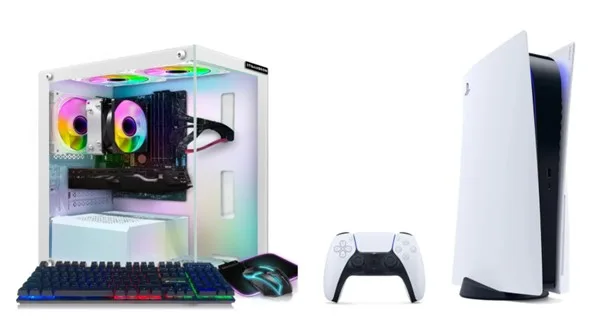
A white RGB gaming PC setup with keyboard and mouse next to a white gaming console and controller.

Stop Wasting Money on Gaming Specs That Do Not Matter: A 2025 Hardware Upgrade Field Guide

Ultra fast SSDs, ray traced shadows, AI upscaling, cloud gaming, quantum buzzwords everywhere. If you believe the marketing, you need all of it right now or you are not a real gamer.That is nonsense.In this TNT Nerds 4D breakdown, we strip the hype off modern gaming hardware and show you what actually changes your experience in 2025, what is safe to skip, and how to build or buy a rig that feels fast, looks great, and does not torch your wallet. Whether you are on console, PC, or a gaming laptop, we will walk through the upgrades that give you real world wins today while still keeping an eye on the free, open, user first future we actually want to live in.
Read More
A gloved hand interacts with digital security icons, including a padlock, cloud storage, user profiles, financial symbols, and a laptop, representing data protection and cybersecurity.

Healthcare Cybersecurity Is Failing At The Basics: How To Lock Down Today And Get Ready For The Quantum Tomorrow

Healthcare just had its worst year on record for breached patient data.Not because of ultra sophisticated nation state zero days, but because of the same old weak links: missing multi factor authentication, unpatched Windows boxes, and vendors nobody bothered to vet.At the same time, regulators are tightening the screws and quantum computing is quietly stalking our current encryption. That mix makes a lot of teams freeze. Do you fix today’s fires or prepare for Q day?You do both, but not the way the hype cycle tells you.In this TNT Nerds deep dive, we break down a practical, no nonsense roadmap for clinics, hospitals, and medical device makers: how to get the boring fundamentals right, make sense of the new regulations, and start building a quantum resilient security posture without blowing up your budget or your IT team.
Read More
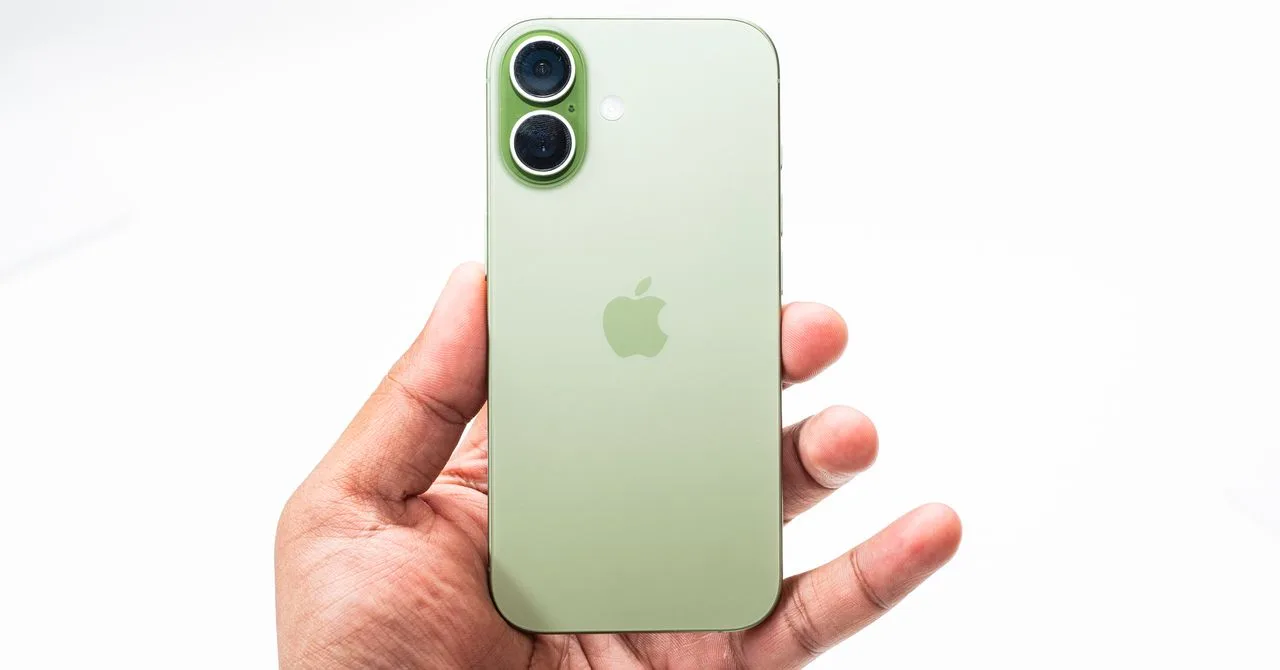
Green smartphone with dual rear cameras held in a person’s hand

Best iPhone To Buy In 2025: Real Talk Guide To Apple Intelligence, MagSafe, And Your Wallet

Apple just dropped another alphabet of iPhones, and the internet is already drowning in spec sheets and sponsored “must buy” lists. Meanwhile, you just want to know one thing: which iPhone should you actually buy in 2025, and which ones are a waste of money?As your resident TNT Nerds tech brain, I am going to break this down the way you would if you had a weekend, a lab full of phones, and zero patience for marketing. We will walk through real life scenarios, not press release fantasy: the creator who lives in the camera app, the small business owner issuing phones to staff, the parent trying not to get locked into a painful carrier contract, the power user who cares more about battery cycles than titanium curves.We will talk Apple Intelligence without the hype, MagSafe and Qi2 without the buzzwords, and carrier deals without the fine print. By the end, you will know exactly which iPhone fits your use case, when it is smarter to buy last year’s Pro, and when the best move is to keep your current phone and just swap a battery.
Read More
A white cylindrical networking device with a glowing blue LED ring on top, placed on a wooden surface.

From Random Routers To A Real Network Brain: Why Unifi Feels So Good Once You Switch

Most of us live behind whatever plastic router our ISP tossed in the box years ago. It blinks, it mostly works, and when it does not, we simply reboot and pray. Then you try something like Unifi and suddenly your network stops feeling like a mystery and starts behaving like a system. This is the story of what changes when you move from random gear to a unified network brain, why it is so hard to go back, and how you can get there without breaking your budget or your sanity.
Read More