our new website is still under construction, pardon any dust.

our new 4d ai is being implemented, she will blow your socks off.

[cloneui_pill id="ziggi-pill" bot="chatbot-egeoub" lang="en-US" label="Talk to Ziggi"]
Full Article, Podcast, & Blog
Creator voice feature

Listen to this article in my real voice

Press play for a smooth narrated version built for scrolling and skimming while you read.
Smart recap version Ideal for background listening
TN
Voice first edition
Behind the page audio take
Play About a few minutes
Tap play and explore the rest of the page while I talk you through it.
Pro tip audio may keep playing even if you jump to another section of this page.
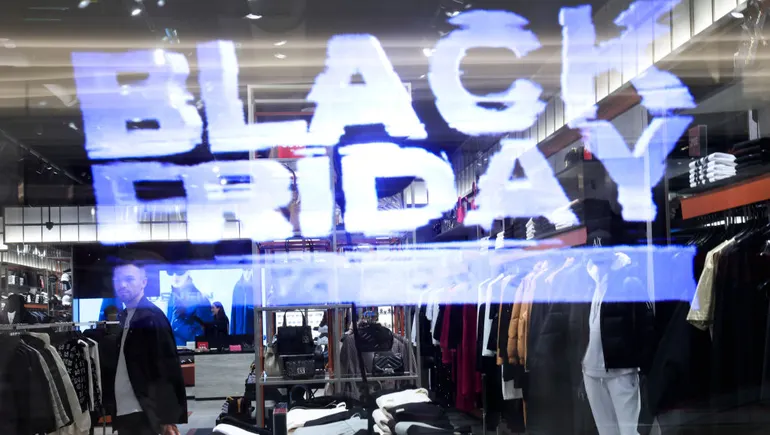
Black Friday sale store front

Every year, Thanksgiving feels like the calm before a retail storm. Families gather, shoppers refresh their carts, and businesses brace for a revenue surge. But behind the scenes, another group is gearing up for its own holiday tradition — cybercriminals.

As Cybersecurity Dive reports, the Thanksgiving‑to‑Black‑Friday stretch marks one of the highest‑risk periods for ransomware attacks, social engineering campaigns, and corporate network intrusions. It’s the perfect storm: distracted staff, reduced IT coverage, and a spike in online activity.

Why Holidays Supercharge Cyber Threats

During the holiday season, corporate teams scatter across time zones and airports. Many work limited hours or check in from remote or unfamiliar networks. This drastically reduces visibility for IT and security teams — and attackers know it.

“Many security teams operate at reduced capacity during the holidays,” said Scott Algeier of the Information Technology ISAC. “However, this does not mean that networks are left undefended.”

Unfortunately, ransomware groups and threat actors see this staffing drop as open season. Research from Semperis, based on surveys of 1,500 IT professionals worldwide, shows that more than half of all ransomware attacks over the last year happened during weekends or holidays.

Here’s the alarming part: eight out of every ten companies reduce security staffing by at least 50% during holiday periods.

When One Weekend Costs $400 Million

A major example came from the U.K.’s Marks & Spencer, which suffered a damaging social engineering attack right before Easter. The breach ultimately led to more than $400 million in losses and exposed the retail sector’s vulnerability during holiday downtime.

It wasn’t an isolated case. Attacks tied to the Scattered Spider group later rippled across global retail, compromising millions in revenue and customer data.

“During the holiday season, we know that most security teams are operating with reduced staff,” said Matt Brady of Palo Alto Networks. “Cyber criminals are fully aware of this.”

Retailers and hospitality organizations, according to RH‑ISAC, now prepare months ahead with simulations, refresher training, and improved incident response planning.

After-Hours Encryption: Hackers’ Favorite Window

Google’s Threat Intelligence Group adds another chilling statistic: in 2024, more than 70% of ransomware encryptions happened between 6 p.m. and 8 a.m., and 30% started on weekends.

“Encryption during non-working hours allows threat actors more time to complete their operation,” said GTIG analyst Zach Riddle.

Yes — even hackers take time off during holidays. But not before they run their playbook.

What This Means for Small Businesses

Large enterprises aren’t the only targets. Small businesses — who often have even tighter staffing — face equal or greater risk. A quiet long weekend could be the difference between running smoothly and waking up Monday to encrypted systems and halted operations.

This is where proactive, always‑on monitoring and good cyber hygiene become critical.

Where TNT Nerds Fits In

At TNT Nerds, we’ve seen firsthand how holiday distractions create the perfect entry point for attackers. That’s why we help businesses strengthen remote access, improve identity controls, deploy proactive monitoring, and establish always‑awake security practices — even when your team is enjoying pumpkin pie.

Whether you’re an online retailer, a local shop, or a growing startup, tightening your cybersecurity perimeter before peak shopping season is no longer optional — it’s survival.

Stay Alert This Holiday Season

The holidays bring joy, family time, and huge sales spikes — but also heightened cyber risk. Awareness is the first defense. Preparation is the second.

If your business wants to stay protected during the year’s busiest and riskiest time, TNT Nerds is here to help keep the lights on, the network safe, and the attackers frustrated.

Black Friday’s Dark Secret: The Cybercrime Surge Hiding Behind the Holiday Hype

Black Friday may be a goldmine for shoppers and retailers, but it’s an even bigger jackpot for cybercriminals. As businesses relax, staff travel, and IT teams shrink for the long weekend, hackers ramp up ransomware attacks, social engineering scams, and nighttime intrusions. With over half of holiday attacks striking when companies are least prepared, even a single missed alert can cost millions. Our latest article breaks down why Thanksgiving week is now one of the most dangerous times for digital operations — and how smart businesses stay protected. Source: Cybersecurity Dive
A speaker sitting on stage in front of a large OpenAI logo, gesturing with one hand during a presentation.

OpenAI Wants The Whole AI Stack. What Does That Leave For The Rest Of Us?

OpenAI is racing to own the entire AI stack, from custom chips and data centers all the way up to the apps that live in your browser, your job hunt, and eventually your pocket. To investors, that sounds like a textbook moat. To everyone else, it sounds like the internet we use every day could soon be running on a few private rails.This piece breaks down what OpenAI is really building, why it suddenly needs a mountain of cash to do it, and where that leaves the rest of us who are not sitting on a fusion startup, a chip team, and a SoftBank term sheet. If Big AI is going full stack, how do small businesses, indie developers, and regular humans keep a real say in the future of their own tech?
Read More
A white RGB gaming PC setup with keyboard and mouse next to a white gaming console and controller.

Stop Wasting Money on Gaming Specs That Do Not Matter: A 2025 Hardware Upgrade Field Guide

Ultra fast SSDs, ray traced shadows, AI upscaling, cloud gaming, quantum buzzwords everywhere. If you believe the marketing, you need all of it right now or you are not a real gamer.That is nonsense.In this TNT Nerds 4D breakdown, we strip the hype off modern gaming hardware and show you what actually changes your experience in 2025, what is safe to skip, and how to build or buy a rig that feels fast, looks great, and does not torch your wallet. Whether you are on console, PC, or a gaming laptop, we will walk through the upgrades that give you real world wins today while still keeping an eye on the free, open, user first future we actually want to live in.
Read More
A gloved hand interacts with digital security icons, including a padlock, cloud storage, user profiles, financial symbols, and a laptop, representing data protection and cybersecurity.

Healthcare Cybersecurity Is Failing At The Basics: How To Lock Down Today And Get Ready For The Quantum Tomorrow

Healthcare just had its worst year on record for breached patient data.Not because of ultra sophisticated nation state zero days, but because of the same old weak links: missing multi factor authentication, unpatched Windows boxes, and vendors nobody bothered to vet.At the same time, regulators are tightening the screws and quantum computing is quietly stalking our current encryption. That mix makes a lot of teams freeze. Do you fix today’s fires or prepare for Q day?You do both, but not the way the hype cycle tells you.In this TNT Nerds deep dive, we break down a practical, no nonsense roadmap for clinics, hospitals, and medical device makers: how to get the boring fundamentals right, make sense of the new regulations, and start building a quantum resilient security posture without blowing up your budget or your IT team.
Read More
Green smartphone with dual rear cameras held in a person’s hand

Best iPhone To Buy In 2025: Real Talk Guide To Apple Intelligence, MagSafe, And Your Wallet

Apple just dropped another alphabet of iPhones, and the internet is already drowning in spec sheets and sponsored “must buy” lists. Meanwhile, you just want to know one thing: which iPhone should you actually buy in 2025, and which ones are a waste of money?As your resident TNT Nerds tech brain, I am going to break this down the way you would if you had a weekend, a lab full of phones, and zero patience for marketing. We will walk through real life scenarios, not press release fantasy: the creator who lives in the camera app, the small business owner issuing phones to staff, the parent trying not to get locked into a painful carrier contract, the power user who cares more about battery cycles than titanium curves.We will talk Apple Intelligence without the hype, MagSafe and Qi2 without the buzzwords, and carrier deals without the fine print. By the end, you will know exactly which iPhone fits your use case, when it is smarter to buy last year’s Pro, and when the best move is to keep your current phone and just swap a battery.
Read More
A white cylindrical networking device with a glowing blue LED ring on top, placed on a wooden surface.

From Random Routers To A Real Network Brain: Why Unifi Feels So Good Once You Switch

Most of us live behind whatever plastic router our ISP tossed in the box years ago. It blinks, it mostly works, and when it does not, we simply reboot and pray. Then you try something like Unifi and suddenly your network stops feeling like a mystery and starts behaving like a system. This is the story of what changes when you move from random gear to a unified network brain, why it is so hard to go back, and how you can get there without breaking your budget or your sanity.
Read More