our new website is still under construction, pardon any dust.

our new 4d ai is being implemented, she will blow your socks off.

[cloneui_pill id="ziggi-pill" bot="chatbot-egeoub" lang="en-US" label="Talk to Ziggi"]
Full Article, Podcast, & Blog

The Analog Rebellion: Why AI’s Brightest Minds Are Going Back to Basics

AI themed artwork

We tend to imagine AI engineers living in a futuristic bubble where bots answer emails, schedule meetings, and optimize every waking moment. But according to a fascinating report shared by WebProNews, the reality is almost the complete opposite. The very people building the world’s most advanced automation tools are increasingly choosing not to automate their own daily lives.

Tap to explore: Why tech insiders are refusing to let AI handle tasks like messaging, scheduling, or even note‑taking.

The Trust Gap: Why AI Engineers Still Write Their Own Emails

Machine-learning engineer Stella Dong is one of many insiders refusing to hand control of her voice to a bot. She writes her own emails, edits line by line, and uses tools like Copilot only for polishing—not drafting. Her reasoning is simple: AI can generate words, but it cannot guarantee intent, nuance, or relationship awareness.

To those who build these systems, the risk of a tone-deaf or hallucinated response simply isn’t worth the seconds saved. This echoes something we often emphasize during client consultations at TNT Nerds: automation is powerful, but only when used with intention. The smartest workflow isn’t the most automated one—it’s the one you control.

Friction Makes Memory: The Case Against AI Scheduling

Many AI workers also avoid automated calendar tools. Research—and real-world experience—show that manually entering meetings reinforces memory. When AI manages your schedule, you become a passive passenger in your own workflow.

Insiders prefer the cognitive map that comes from friction. Dong even had her partner schedule an interview manually, bypassing every automated link. Old-school? Yes. Effective? Absolutely.

Try this: Add your next appointment manually. Notice how much more vividly you remember it compared to tapping an automated link.

The Automation Paradox: Capability vs. Wisdom

The McKinsey Global Institute reports that current technology could automate nearly 57% of all work hours performed by Americans. But as senior partner Lareina Yee points out, that number reflects what is technically possible, not what is strategically wise.

Some tasks may remain intentionally manual—not because robots can’t perform them, but because humans must. Without writing emails, taking notes, or planning meetings, how do junior employees develop judgment? How do they learn to effectively critique AI outputs later?

The Return of Pen and Paper—Inside the Most Advanced Labs

Ziyi Liu, an AI intern at Microsoft, ignores the powerful transcription features built into her tools and instead types her own meeting notes. Others go even further: marketing consultant and AI trainer Ryan Bearden uses a Moleskine notebook, sketching ideas on paper before touching a digital workspace.

This analog approach signals focus, control, and intentionality—qualities that automation often dulls if overused.

Strategic Friction: The Hidden Competitive Advantage

The insiders’ real secret? They deliberately slow down parts of their workflow to keep their minds sharp. By drafting manually, planning their own schedule, or thinking on paper, they stay in control of their cognition—not outsourcing it to a machine trained on statistical averages.

In an era obsessed with speed, originality often comes from resisting the urge to automate everything.

The Future: Not Full Automation, But Smart Hybrid Workflows

This rising “analog rebellion” hints at what the future of work is evolving into: a hybrid model where humans choose when to automate and when to stay hands-on. Those who let AI run every part of their workday may drift into passive, shallow workflows. Those who manage AI deliberately—like Dong, Liu, and Bearden—maintain sharper thinking, stronger memory, and better control.

At TNT Nerds, we see this truth in every modernization project we undertake. The goal isn’t to automate everything—it’s to automate the right things. Friction isn’t the enemy. Poorly applied automation is.

Source spotlight: Inspired by reporting from WebProNews. Full article:

The Analog Rebellion: Why Silicon Valley’s AI Architects Are Rejecting Their Own Tools

As AI continues evolving, the true power users won’t be the ones who automate fastest—they’ll be the ones who know exactly when to step back and pick up a pen.

The Analog Rebellion: Why AI’s Top Engineers Are Hitting Pause on Automation

AI may be transforming the world at lightning speed, but the people building it are quietly pushing back—choosing handwritten notes, manual scheduling, and personally crafted emails over the convenience of automation. Inspired by reporting from WebProNews, this deep dive explores why Silicon Valley’s brightest are embracing “strategic friction,” and how this shift signals a smarter, more intentional future of hybrid work.
A speaker sitting on stage in front of a large OpenAI logo, gesturing with one hand during a presentation.

OpenAI Wants The Whole AI Stack. What Does That Leave For The Rest Of Us?

OpenAI is racing to own the entire AI stack, from custom chips and data centers all the way up to the apps that live in your browser, your job hunt, and eventually your pocket. To investors, that sounds like a textbook moat. To everyone else, it sounds like the internet we use every day could soon be running on a few private rails.This piece breaks down what OpenAI is really building, why it suddenly needs a mountain of cash to do it, and where that leaves the rest of us who are not sitting on a fusion startup, a chip team, and a SoftBank term sheet. If Big AI is going full stack, how do small businesses, indie developers, and regular humans keep a real say in the future of their own tech?
Read More
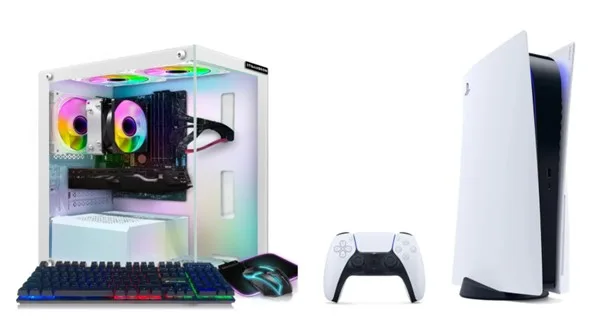
A white RGB gaming PC setup with keyboard and mouse next to a white gaming console and controller.

Stop Wasting Money on Gaming Specs That Do Not Matter: A 2025 Hardware Upgrade Field Guide

Ultra fast SSDs, ray traced shadows, AI upscaling, cloud gaming, quantum buzzwords everywhere. If you believe the marketing, you need all of it right now or you are not a real gamer.That is nonsense.In this TNT Nerds 4D breakdown, we strip the hype off modern gaming hardware and show you what actually changes your experience in 2025, what is safe to skip, and how to build or buy a rig that feels fast, looks great, and does not torch your wallet. Whether you are on console, PC, or a gaming laptop, we will walk through the upgrades that give you real world wins today while still keeping an eye on the free, open, user first future we actually want to live in.
Read More
A gloved hand interacts with digital security icons, including a padlock, cloud storage, user profiles, financial symbols, and a laptop, representing data protection and cybersecurity.

Healthcare Cybersecurity Is Failing At The Basics: How To Lock Down Today And Get Ready For The Quantum Tomorrow

Healthcare just had its worst year on record for breached patient data.Not because of ultra sophisticated nation state zero days, but because of the same old weak links: missing multi factor authentication, unpatched Windows boxes, and vendors nobody bothered to vet.At the same time, regulators are tightening the screws and quantum computing is quietly stalking our current encryption. That mix makes a lot of teams freeze. Do you fix today’s fires or prepare for Q day?You do both, but not the way the hype cycle tells you.In this TNT Nerds deep dive, we break down a practical, no nonsense roadmap for clinics, hospitals, and medical device makers: how to get the boring fundamentals right, make sense of the new regulations, and start building a quantum resilient security posture without blowing up your budget or your IT team.
Read More
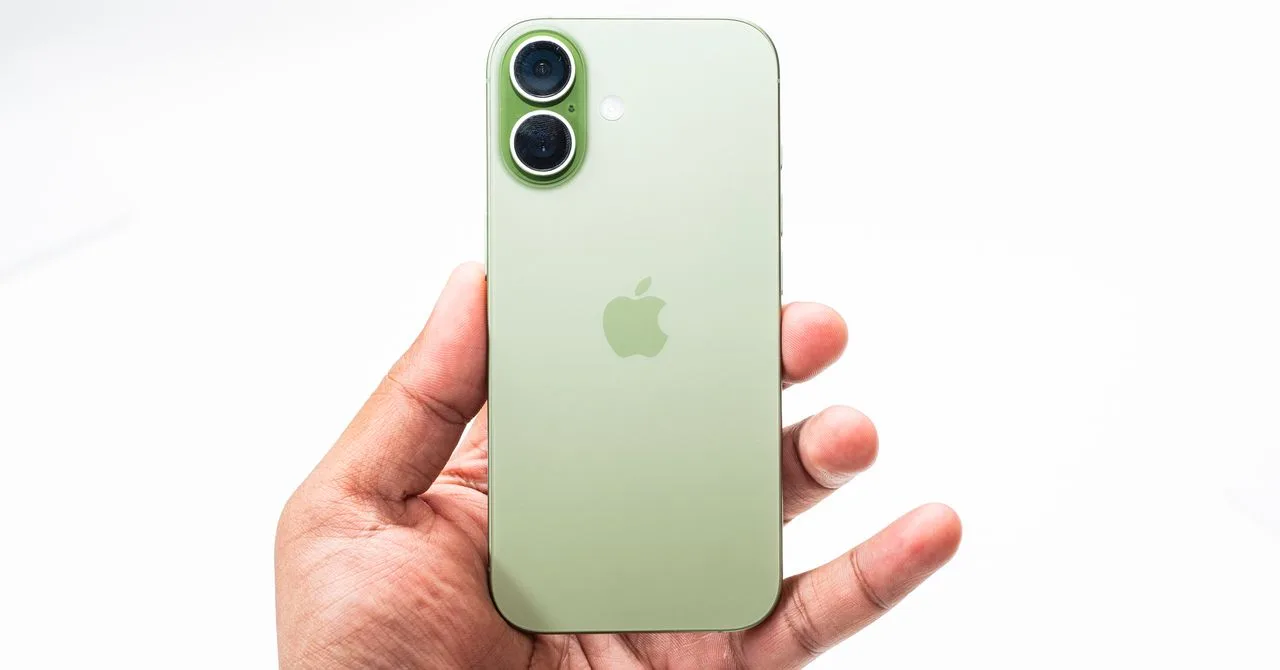
Green smartphone with dual rear cameras held in a person’s hand

Best iPhone To Buy In 2025: Real Talk Guide To Apple Intelligence, MagSafe, And Your Wallet

Apple just dropped another alphabet of iPhones, and the internet is already drowning in spec sheets and sponsored “must buy” lists. Meanwhile, you just want to know one thing: which iPhone should you actually buy in 2025, and which ones are a waste of money?As your resident TNT Nerds tech brain, I am going to break this down the way you would if you had a weekend, a lab full of phones, and zero patience for marketing. We will walk through real life scenarios, not press release fantasy: the creator who lives in the camera app, the small business owner issuing phones to staff, the parent trying not to get locked into a painful carrier contract, the power user who cares more about battery cycles than titanium curves.We will talk Apple Intelligence without the hype, MagSafe and Qi2 without the buzzwords, and carrier deals without the fine print. By the end, you will know exactly which iPhone fits your use case, when it is smarter to buy last year’s Pro, and when the best move is to keep your current phone and just swap a battery.
Read More
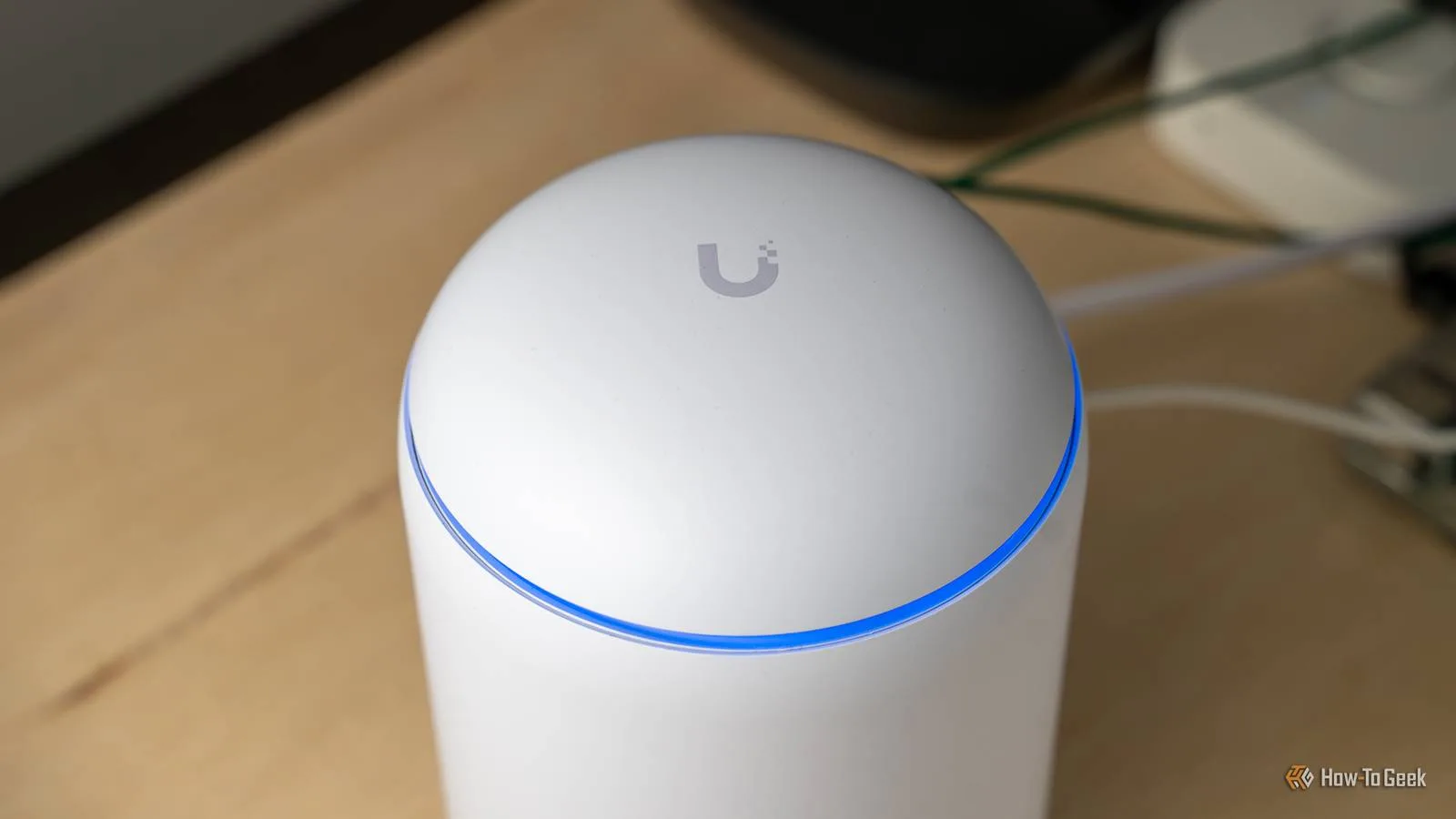
A white cylindrical networking device with a glowing blue LED ring on top, placed on a wooden surface.

From Random Routers To A Real Network Brain: Why Unifi Feels So Good Once You Switch

Most of us live behind whatever plastic router our ISP tossed in the box years ago. It blinks, it mostly works, and when it does not, we simply reboot and pray. Then you try something like Unifi and suddenly your network stops feeling like a mystery and starts behaving like a system. This is the story of what changes when you move from random gear to a unified network brain, why it is so hard to go back, and how you can get there without breaking your budget or your sanity.
Read More