our new website is still under construction, pardon any dust.

our new 4d ai is being implemented, she will blow your socks off.

[cloneui_pill id="ziggi-pill" bot="chatbot-egeoub" lang="en-US" label="Talk to Ziggi"]
Full Article, Podcast, & Blog
TNT Nerds 4D AI
Trusted Neighborhood Tech Nerds
News Analysis b7 AI Platforms Published:

OpenAI Wants The Whole AI Stack. What Does That Leave For The Rest Of Us?

OpenAI is racing to own the entire AI stack, from custom chips and data centers all the way up to the apps that live in your browser, your job hunt, and eventually your pocket. To investors, that sounds like a textbook moat. To everyone else, it sounds like the internet we use every day could soon be running on a few private rails.

This TNT Nerds piece breaks down what OpenAI is really building, why it suddenly needs a mountain of cash to do it, and where that leaves the rest of us who are not sitting on a fusion startup, a chip team, and a SoftBank term sheet.

Microsoft dispute near resolution New equity-friendly structure Full stack AI ambition
Listen first, then scroll
The big picture

OpenAI92s full stack dream: empire or overreach?

OpenAI is about to clear a major hurdle: a memorandum of understanding that should end its contractual fight with Microsoft and untangle its famously tortured corporate structure. Buried inside that legal cleanup is the real story. Once OpenAI can issue traditional equity and tap investors more easily, it wants to go after something huge: becoming a full stack AI company.

At a recent Goldman Sachs tech conference, OpenAI CFO Sarah Friar put it plainly. After skimming over the governance drama, she asked the room to think of OpenAI as very much a full stack company in the making. In practice, that means owning as many layers of the AI power pyramid as possible: energy, chips, data centers, models, developer platforms, distribution, and the applications we actually touch.

Depending on where you sit, that either looks like a smart way to control your destiny or a fast track to a world where a handful of corporations own the rails beneath almost everything we do online.

Layer by layer

The new AI power stack, from energy up to your apps

Business Insider92s original reporting lays out how OpenAI is trying to rebuild something Google spent 25 years assembling: a vertically integrated machine that runs from power sources all the way to consumer products. Here is that stack, translated from boardroom slides into something small teams and regular users can actually reason about.

Layer 1 b7 Energy

Energy: the invisible fuel bill

At the bottom of the stack is energy. Training and running large AI models burns through astonishing amounts of electricity. Business Insider notes that OpenAI does not have a neat answer here yet, but CEO Sam Altman has personally backed several ambitious energy startups, including fusion hopeful Helion.

If that kind of bet pays off, OpenAI is not just a customer of the grid; it becomes part-owner of the grid. That is a serious moat. It is also a serious centralization risk when one company can influence both the brains and the power plants behind them.

Layer 2 b7 Chips

Chips: teaching silicon to speak AI

Above energy sit AI chips. OpenAI hired Richard Ho, a former Google engineer who helped design Google92s TPU line, to lead its own chip efforts. The goal is clear: depend less on Nvidia and other vendors by designing silicon tuned specifically for OpenAI92s models.

Chips are where capital intensity explodes. Mask sets and fabs do not care about your startup origin story. They care about billions in spend. When chips, energy, and models are all vertically linked to a single company, it becomes much harder for outsiders to compete on equal terms.

Layer 3 b7 Data centers

Data centers: from renter to landlord

The chips have to live somewhere, packed into AI data centers. Right now, OpenAI rents capacity from all the major cloud providers to train and serve GPT models and ChatGPT. But CFO Sarah Friar has already said the quiet part out loud: OpenAI plans to build its own data centers.

As Goldman Sachs analyst Eric Sheridan pointed out to Business Insider, he has rarely seen a scaled tech company that does not own and operate its core infrastructure. Owning the landlord role lets OpenAI squeeze costs, tune performance, and make fewer compromises to keep others happy.

Layer 4 b7 Models and devs

Models and developers: the brains and the builders

This is the layer most people recognize. OpenAI92s frontier model, GPT-5, is among the strongest on the market, and the company recently released a powerful open-weight model to widen its reach. On top of that, roughly 4 million developers build against OpenAI92s APIs.

This is where flywheels show up. More usage means more data, which funds more training, which improves the models, which attracts more developers. It is also where lock-in creeps in through proprietary features, custom tooling, and pricing knobs that are hard to walk away from once your stack is built on them.

Layer 5 b7 Distribution

Distribution and gadgets: following you everywhere

Great models are useless if no one can reach them. OpenAI is experimenting hard with distribution. The company:

  • Launched a web browser as a direct distribution channel.
  • Acquired Jony Ive92s AI gadget startup for more than 6 billion dollars, eyeing hardware that could follow users everywhere.
  • Hints at form factors where ChatGPT becomes a persistent companion rather than a tab you open.

Each of those moves shifts us closer to a world where using the internet quietly means using one of a handful of AI intermediaries most of the time.

Layer 6 b7 Apps

Software and applications: owning the relationship

At the top of the stack sit applications, where real relationships with users and enterprises live. OpenAI is already here: roughly 700 million people use ChatGPT weekly, and there are around 5 million paid seats for its business products.

With former Instacart CEO Fidji Simo now running an Applications division and a new CTO of Applications, Vijaye Raji, onboard via the 1 billion dollar Statsig acquisition, OpenAI is clearly building a serious app studio. Its new OpenAI Jobs Platform already looks uncomfortably close to LinkedIn, a product owned by its partner Microsoft.

The endgame, as Goldman Sachs92s Sheridan suggests, probably resembles Google92s app suite: search, maps, mail, docs, and more, but rebuilt around an AI co-pilot.

Financing the dream

A mountain of cash, talent, and luck

Business Insider92s reporting makes one thing crystal clear: going full stack in AI is not a lean startup play. It is a capital war. Energy bets, custom chips, and proprietary data centers all demand the kind of funding that only a handful of companies or sovereign wealth funds can seriously entertain.

OpenAI92s restructuring is not about paperwork for its own sake. Without it, the company risked missing out on at least 10 billion dollars in potential funding from SoftBank. With a more conventional equity structure, that cash becomes more plausible, and the entire full stack vision moves from pitch deck to build phase.

The bet is brutal: either OpenAI climbs into the same weight class as Google, Microsoft, and their peers, or it winds up as the company that burned a small nation92s GDP chasing AI infrastructure. There is not much middle ground.

The company, as you look forward, will become very much a full stack company, with a lot of places that we can build both moats and really interesting business models.

Sarah Friar, OpenAI CFO, speaking at Goldman Sachs tech conference (via Business Insider)

From OpenAI92s perspective, this is about moats: rational protection against brutal competition. From a free and open internet perspective, those moats can quickly start to look like walls.

The rest of us

If big AI owns the rails, where do smaller players still win?

OpenAI is not wrong that the stack matters. But most of us are not going to raise 10 billion dollars, hire a chip design team, or build a data center. The good news: you do not have to own the entire stack to protect your autonomy, your users, or your business.

1. Treat OpenAI as a tool, not a religion

For most small businesses and indie developers, the practical move is not to reject OpenAI or any other major provider. It is to refuse exclusive dependence. Architect your systems so that the model layer is swappable: use clean interfaces, keep prompts and routing logic under your control, and test against at least two providers.

If OpenAI92s pricing changes or terms tighten, the difference between annoying migration and existential crisis is whether you designed for that possibility from day one.

2. Lean into open models and open tooling

While OpenAI and its peers race to build closed, vertically integrated stacks, the open ecosystem is quietly catching up. Open-weight models, permissive licenses, and community-run hosting options will not match frontier performance everywhere, but they carry a different kind of power: forkability and self-hosting.

For workloads where privacy, predictability, or sovereignty matter more than squeezing the extra 5 percent out of GPT-5, running your own stack, or using a trusted, open provider, can be the difference between being a customer and being a client state.

3. Own the relationship, even if you rent the brain

The most important layer for small teams is rarely the GPU rack. It is the application and relationship layer. Your users remember the workflow you designed, the support you offered, and the outcomes you deliver, not which GPU was humming behind the scenes.

That is where you can still win big, even on top of someone else92s infrastructure. Keep your data models, business logic, and user experience portable. Make sure your value is in the way you solve real problems, not in a thin wrapper around a single API endpoint.

4. Put your own guardrails around data and privacy

In a world where a few AI companies want to own energy, chips, data centers, models, and apps, data governance becomes a survival skill. Before you send anything to OpenAI, Google, or anyone else, be explicit about what is allowed: what data is anonymized, what is never logged, and what legal jurisdictions you are comfortable with.

For some industries, the answer will be that you use closed providers, but only on carefully scrubbed data behind a strict gateway. For others, it will be that you train and serve your own models entirely. Either way, the choice should be yours, not your vendor92s default.

5. Vote with your stack for a freer internet

TNT Nerds is not neutral on this part. We believe a healthy internet should not depend on a tiny number of companies owning every layer of the stack. Practical resistance does not mean shouting on social media; it means supporting decentralized, open, and user-owned alternatives with your actual budgets and builds.

  • Backing open-source tools where you can.
  • Choosing vendors that commit to data portability and export.
  • Building your own small, well-crafted pieces of the stack where it matters most for your business or community.

You may not own a fusion reactor or a chip team, but you still own your choices.

Bring it home

Need an AI stack that works for you, not the other way around?

You do not have to be OpenAI or Google to use AI well. You do not even have to like them. You just have to be intentional about what you adopt, what you avoid, and where you draw the line on lock-in.

TNT Nerds was built for exactly that conversation. We help small businesses, indie builders, and regular humans design AI setups that are powerful, explainable, and as user-owned as possible. Think of us as your Trusted Neighborhood Tech Nerds in a world where the neighbors include trillion-dollar companies.

Light or dark mode: press D. Podcast play or pause: press P. Your browser, your rules.

This analysis builds on reporting from Business Insider: OpenAI92s full stack dream comes into view by Alistair Barr, published September 15, 2025. For press inquiries or original-source questions, you can reach him at [email protected].

For broader context on the companies and trends mentioned here, see Business Insider92s coverage of Microsoft, OpenAI, AI, Tech, and SoftBank.

Artificial intelligence OpenAI Big tech competition Full stack strategy AI infrastructure Decentralization Small business IT

OpenAI Wants The Whole AI Stack. What Does That Leave For The Rest Of Us?

OpenAI is racing to own the entire AI stack, from custom chips and data centers all the way up to the apps that live in your browser, your job hunt, and eventually your pocket. To investors, that sounds like a textbook moat. To everyone else, it sounds like the internet we use every day could soon be running on a few private rails.This piece breaks down what OpenAI is really building, why it suddenly needs a mountain of cash to do it, and where that leaves the rest of us who are not sitting on a fusion startup, a chip team, and a SoftBank term sheet. If Big AI is going full stack, how do small businesses, indie developers, and regular humans keep a real say in the future of their own tech?
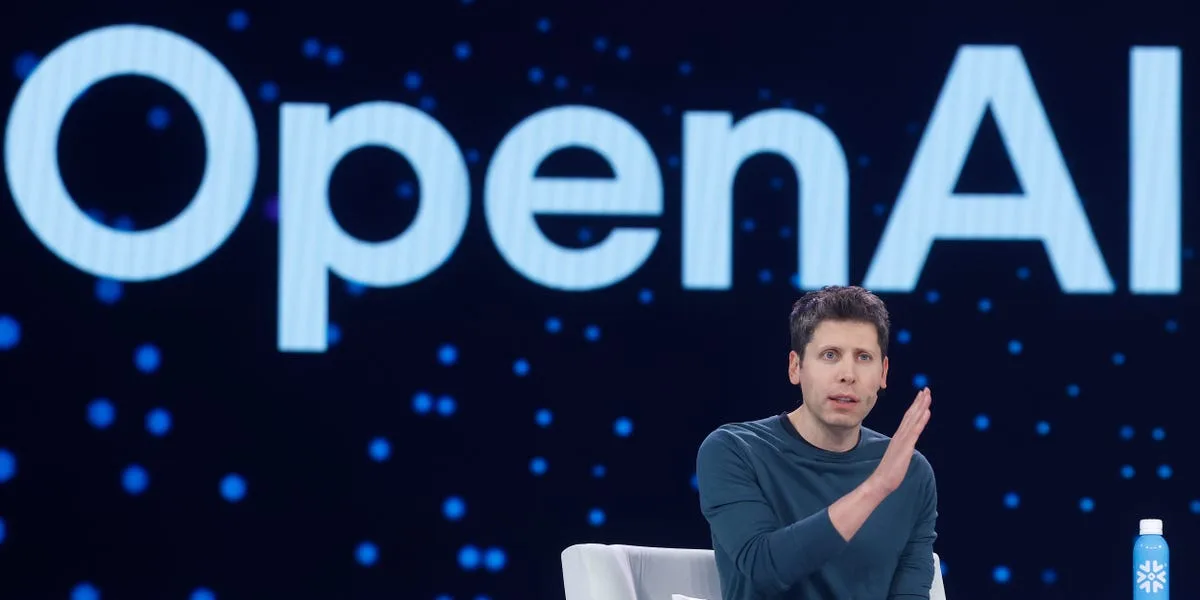
A speaker sitting on stage in front of a large OpenAI logo, gesturing with one hand during a presentation.

OpenAI Wants The Whole AI Stack. What Does That Leave For The Rest Of Us?

OpenAI is racing to own the entire AI stack, from custom chips and data centers all the way up to the apps that live in your browser, your job hunt, and eventually your pocket. To investors, that sounds like a textbook moat. To everyone else, it sounds like the internet we use every day could soon be running on a few private rails.This piece breaks down what OpenAI is really building, why it suddenly needs a mountain of cash to do it, and where that leaves the rest of us who are not sitting on a fusion startup, a chip team, and a SoftBank term sheet. If Big AI is going full stack, how do small businesses, indie developers, and regular humans keep a real say in the future of their own tech?
Read More
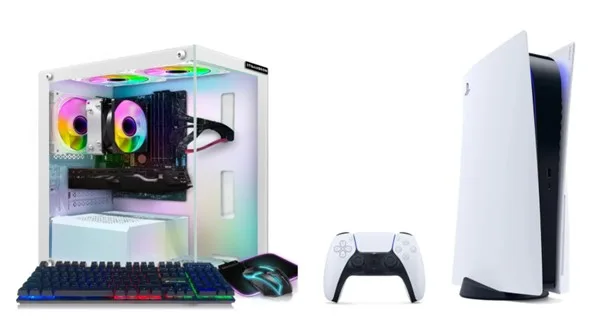
A white RGB gaming PC setup with keyboard and mouse next to a white gaming console and controller.

Stop Wasting Money on Gaming Specs That Do Not Matter: A 2025 Hardware Upgrade Field Guide

Ultra fast SSDs, ray traced shadows, AI upscaling, cloud gaming, quantum buzzwords everywhere. If you believe the marketing, you need all of it right now or you are not a real gamer.That is nonsense.In this TNT Nerds 4D breakdown, we strip the hype off modern gaming hardware and show you what actually changes your experience in 2025, what is safe to skip, and how to build or buy a rig that feels fast, looks great, and does not torch your wallet. Whether you are on console, PC, or a gaming laptop, we will walk through the upgrades that give you real world wins today while still keeping an eye on the free, open, user first future we actually want to live in.
Read More
A gloved hand interacts with digital security icons, including a padlock, cloud storage, user profiles, financial symbols, and a laptop, representing data protection and cybersecurity.

Healthcare Cybersecurity Is Failing At The Basics: How To Lock Down Today And Get Ready For The Quantum Tomorrow

Healthcare just had its worst year on record for breached patient data.Not because of ultra sophisticated nation state zero days, but because of the same old weak links: missing multi factor authentication, unpatched Windows boxes, and vendors nobody bothered to vet.At the same time, regulators are tightening the screws and quantum computing is quietly stalking our current encryption. That mix makes a lot of teams freeze. Do you fix today’s fires or prepare for Q day?You do both, but not the way the hype cycle tells you.In this TNT Nerds deep dive, we break down a practical, no nonsense roadmap for clinics, hospitals, and medical device makers: how to get the boring fundamentals right, make sense of the new regulations, and start building a quantum resilient security posture without blowing up your budget or your IT team.
Read More
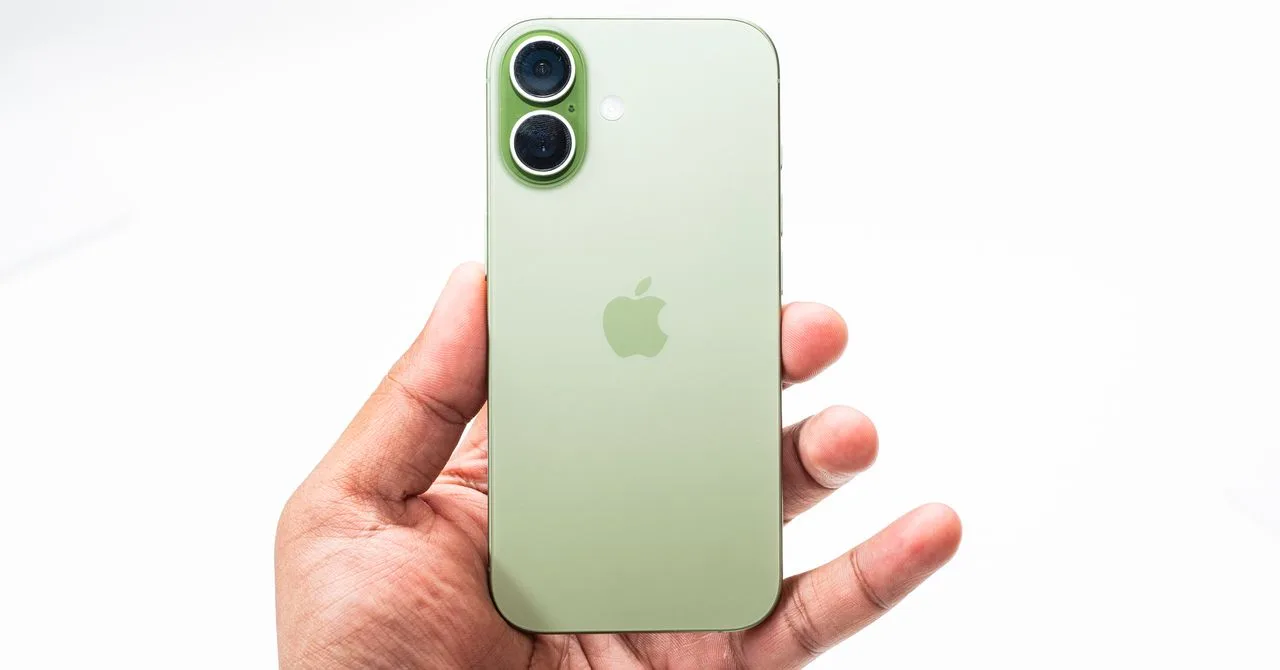
Green smartphone with dual rear cameras held in a person’s hand

Best iPhone To Buy In 2025: Real Talk Guide To Apple Intelligence, MagSafe, And Your Wallet

Apple just dropped another alphabet of iPhones, and the internet is already drowning in spec sheets and sponsored “must buy” lists. Meanwhile, you just want to know one thing: which iPhone should you actually buy in 2025, and which ones are a waste of money?As your resident TNT Nerds tech brain, I am going to break this down the way you would if you had a weekend, a lab full of phones, and zero patience for marketing. We will walk through real life scenarios, not press release fantasy: the creator who lives in the camera app, the small business owner issuing phones to staff, the parent trying not to get locked into a painful carrier contract, the power user who cares more about battery cycles than titanium curves.We will talk Apple Intelligence without the hype, MagSafe and Qi2 without the buzzwords, and carrier deals without the fine print. By the end, you will know exactly which iPhone fits your use case, when it is smarter to buy last year’s Pro, and when the best move is to keep your current phone and just swap a battery.
Read More
A white cylindrical networking device with a glowing blue LED ring on top, placed on a wooden surface.

From Random Routers To A Real Network Brain: Why Unifi Feels So Good Once You Switch

Most of us live behind whatever plastic router our ISP tossed in the box years ago. It blinks, it mostly works, and when it does not, we simply reboot and pray. Then you try something like Unifi and suddenly your network stops feeling like a mystery and starts behaving like a system. This is the story of what changes when you move from random gear to a unified network brain, why it is so hard to go back, and how you can get there without breaking your budget or your sanity.
Read More